Oct 10, 2026Beauty Manufacturing Guides
How to Price Private Label Cosmetics for Profit
Pricing decides whether your brand grows or just sells. Here is a practical framework for pricing private label cosmetics — from true cost to positioning to room for reinvestment.
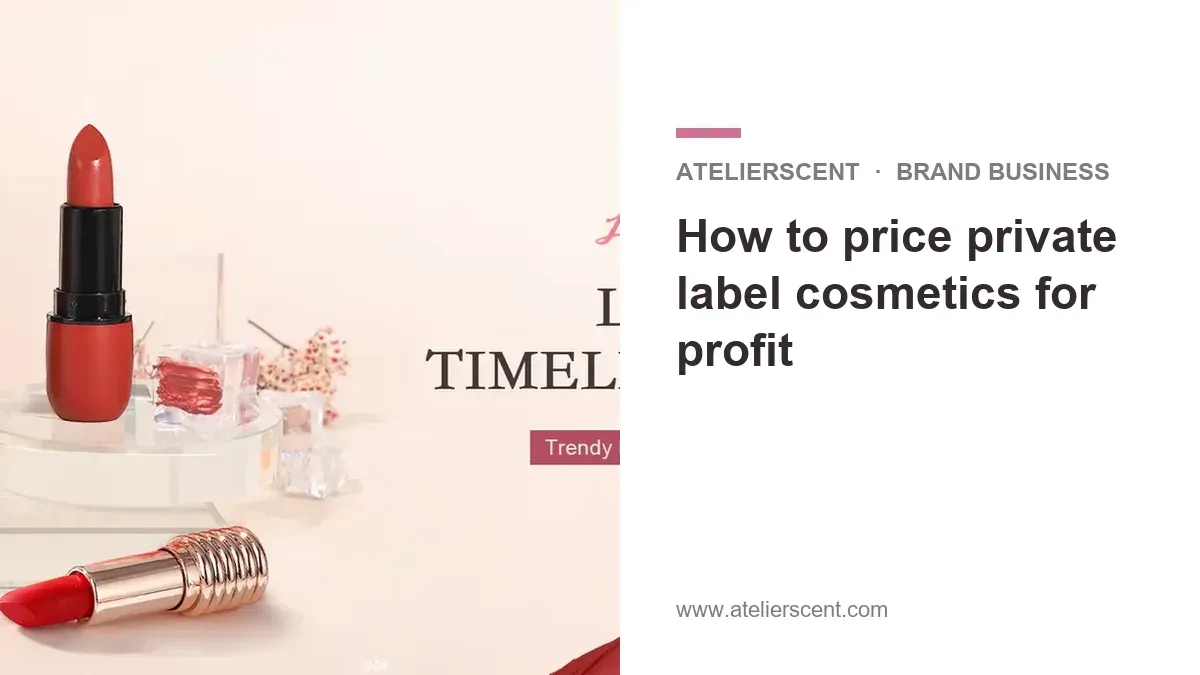
Pricing is where product decisions become business decisions. Set prices too low and every sale works against you; set them too high and the best formula in your range stalls on the shelf. Private label pricing has its own logic — here is a framework that keeps your numbers honest, without a single spreadsheet formula memorized.
Start With the True Cost, Not the Invoice
Your unit cost is more than the factory price. It includes packaging, inbound shipping, platform fees, and the samples you sent before the order. Build the full picture per product first — then every pricing decision stands on real ground instead of optimism. Factories that keep services in-house simplify this step: at Atelierscent, free logo and packaging design simply removes one cost line entirely.
Price for Your Position, Not Your Competitor's Discount
The fastest pricing mistake is anchoring to whoever sells cheapest. Your price should express your positioning: clean ingredients, custom packaging, and manufacturing under strict ISO 22716 and GMP standards are worth communicating — and customers pay for what they understand. Decide what your brand promises, then price as that brand.
Leave Room for the Next Order
A private label price has to fund more than the current jar: the samples for the next product, the marketing test, the packaging upgrade. Prices with no room for reinvestment turn every growth move into a new loan to yourself. When your margin cannot fund growth, the price — or the cost structure — needs to change before the marketing does.
A price is a message about your brand. Make sure it is saying what your packaging promised.
Let Volume Work for You Over Time
First orders carry the highest per-unit costs you will ever pay — that is normal. As reorders come in and quantities grow, unit economics improve, and private label manufacturing rewards that pattern: low MOQ to start, better economics as you scale. Structure your pricing so improving costs increase your margin rather than only your discounting.
Test, Watch, Adjust
Pricing is never finished. Watch which products sell without promotion and which need constant pushing; watch the reorders, not just the first purchases. Products that sell easily at full price are telling you something about the next launch. And when you revisit prices, change one variable at a time so you can read the result.
Build Your Pricing on a Clear Quote
Honest pricing starts with a clear quote: at Atelierscent, quotes cover makeup, skincare, and nail lines with low MOQ and free logo and packaging design included — so the number you build on has fewer surprises in it. Request yours from Diana Dong (Sales Director) at Diana@vipetsy.com.