Beauty Manufacturing Guides
Sampling Questions, Answered: Before You Commit to Mass Production
Samples are the bridge between a quote and a first order. Here are the sampling questions brands ask most — answered straight, before anything is committed.
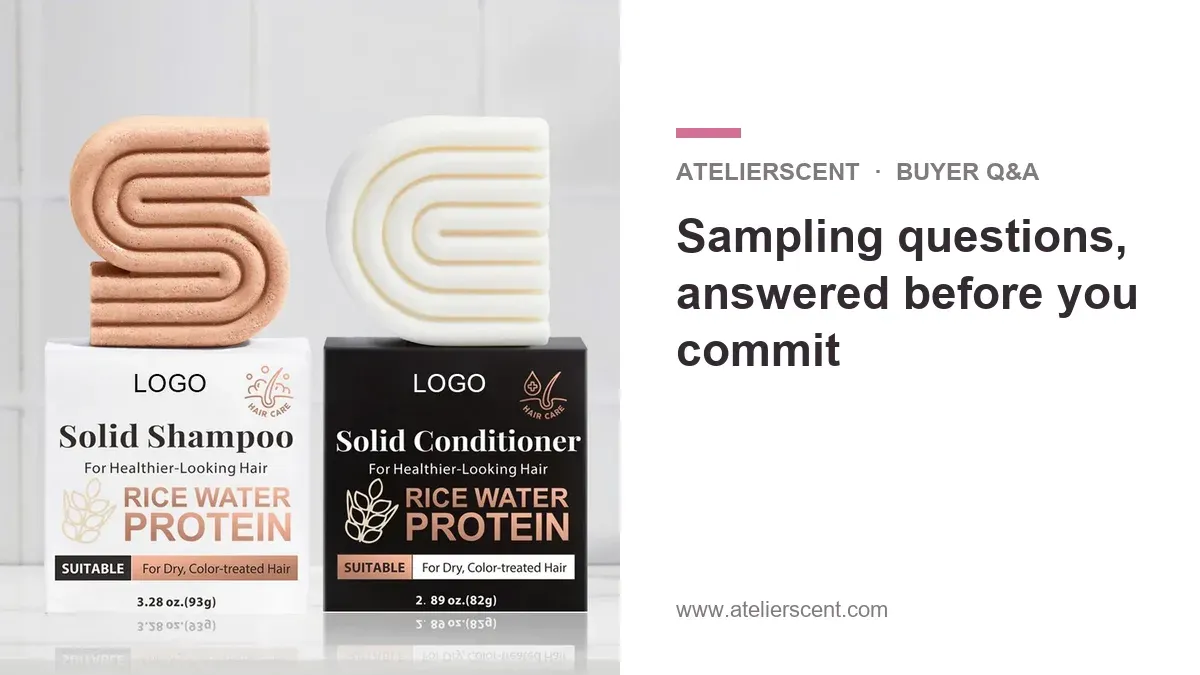
Question-and-answer number two in this series covers the bridge between a quote and a first order: samples. It is the stage where cautious buyers become customers, and where vague factories get exposed. We have published a full guide to evaluating cosmetic samples before mass production; this article answers the questions that come before and after that guide — the ones buyers ask when they are deciding whether to commit.
"Can I try samples before I order?"
Yes — sampling is a standard part of the private label process here, not a special favor. The right way to request one is with a brief: your product category, your positioning, and any reference you care about. A sample request that arrives with a brief gets a sample that answers it; a one-line request gets a guess. This is also the stage where free design support starts — your logo and packaging direction can be part of what you evaluate, not an afterthought.
"The samples arrived. Now what do I check?"
That is exactly the question our evaluation guide walks through, so here is the short version: check the product the way your customer will — texture, wear, scent, feel — and then check it again the way a brand owner must: packaging quality, print, weight, and whether what you are holding matches what was quoted. Take notes as you go. A sample evaluated casually is a decision made blind.
"Will mass production match the sample I approved?"
This is the deepest of the sampling questions, and it deserves a direct answer: matching the approved sample is what batch consistency means, and it is the standard a factory should be held to — production runs under strict ISO 22716 and GMP standards with quality checked at each stage. The professional habit on your side is to keep the approved sample and reference it at the reorder stage, as our restock guide suggests; the professional habit on the factory side is to flag anything that will differ before it ships, not after.
A sample is a question you ask in writing. Mass production is the answer you hold in your hand.
"What if I want changes after seeing the sample?"
Then say so — this is the cheapest moment in the entire process to change your mind. Feedback on a sample costs a revision; feedback after mass production costs inventory. Be specific about which kind of change you mean: packaging and design adjustments run on one path, formula adjustments on another. A factory that takes specific feedback calmly is showing you how it will handle every other conversation you two will ever have.
Request Yours
Tell Diana Dong, Sales Director, at Diana@vipetsy.com what you want to evaluate, and start the sampling conversation with a brief — the stage where your brand's first product begins becoming real.