Oct 14, 2026Beauty Manufacturing Guides
Where to Sell Your Private Label Cosmetics: Channels to Consider
The same product can succeed or stall depending on where it sells. Here are the main sales channels for private label cosmetics — and how to choose your first one.
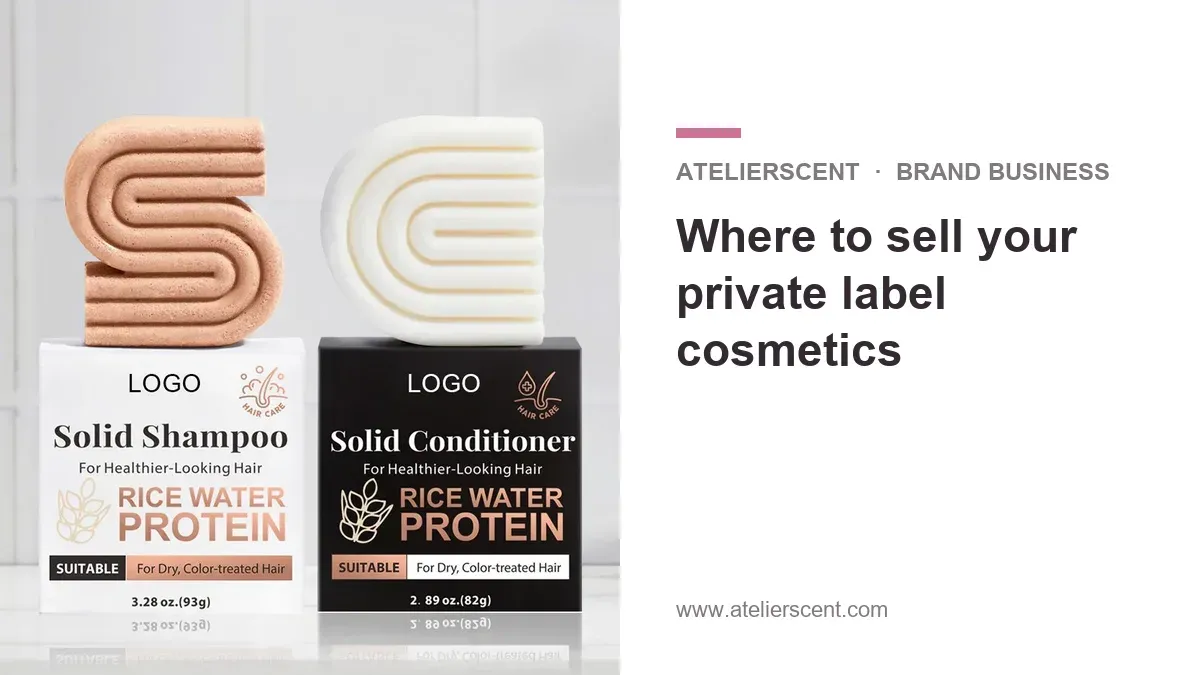
A finished product line creates possibility; a chosen sales channel turns it into revenue. New beauty brands often try to be everywhere at once and end up being nowhere consistently. Here are the main channels for private label cosmetics, what each one rewards, and how to sequence them sensibly.
Your Own Website: The Channel You Control
A simple own-brand website is where most private label brands should start. You control the story, the photography, the pricing, and — most importantly — the customer relationship: every order gives you contact and consent for the next one. Margins are also the healthiest here, because no marketplace takes its share. The trade-off: you bring your own traffic, so it pairs naturally with social content.
Online Marketplaces: Borrowed Traffic, Borrowed Rules
Marketplaces put your products where shoppers already are, with logistics handled to a large degree. The costs are fees, competition on price, and customers who belong to the platform more than to you. Marketplace channels reward private label brands with clean photography, complete product information, and reviews — which is why they often work best as a second channel, after your own site has proven the story.
Salons, Spas and Professional Partners
Professional channels are underrated for private label: a salon that loves your products sells them with a personal recommendation no ad can match. This channel suits skincare and nail lines especially well — the professional context adds credibility, and minimum orders stay manageable under low MOQ manufacturing.
Retail and Wholesale: The Scale Channel
Physical retail and wholesale distributors can move serious volume, but they ask for more: established branding, consistent supply, and margins that leave room for everyone in the chain. This is usually the third channel — after your products have proven themselves directly to customers and you have reorder data to show buyers.
Channels are not a checklist to complete. They are a sequence to grow through — each one funding and de-risking the next.
How to Sequence Your Channels
A sensible pattern for most private label brands: start with your own website plus one social channel, add a marketplace once reviews and content exist, approach professional partners in parallel, and bring retail in when the numbers support it. Products across makeup, skincare, and nail lines adapt well to all of these — which is why building a coherent range under one brand pays off at every step.
Build the Range, Then Choose the Channel
At Atelierscent, private label makeup, skincare, and nail lines come with low MOQ, free logo and packaging design, and manufacturing under strict ISO 22716 and GMP standards — a range ready for whichever channel you enter first. To start yours, contact Diana Dong (Sales Director) at Diana@vipetsy.com.