Oct 23, 2026Beauty Manufacturing Guides
Colorants in Cosmetics: How Color Happens
Every shade in your line starts with colorants — pigments, lakes and dyes. Here is how color gets into a cosmetic, and how to brief shades your factory can hit.
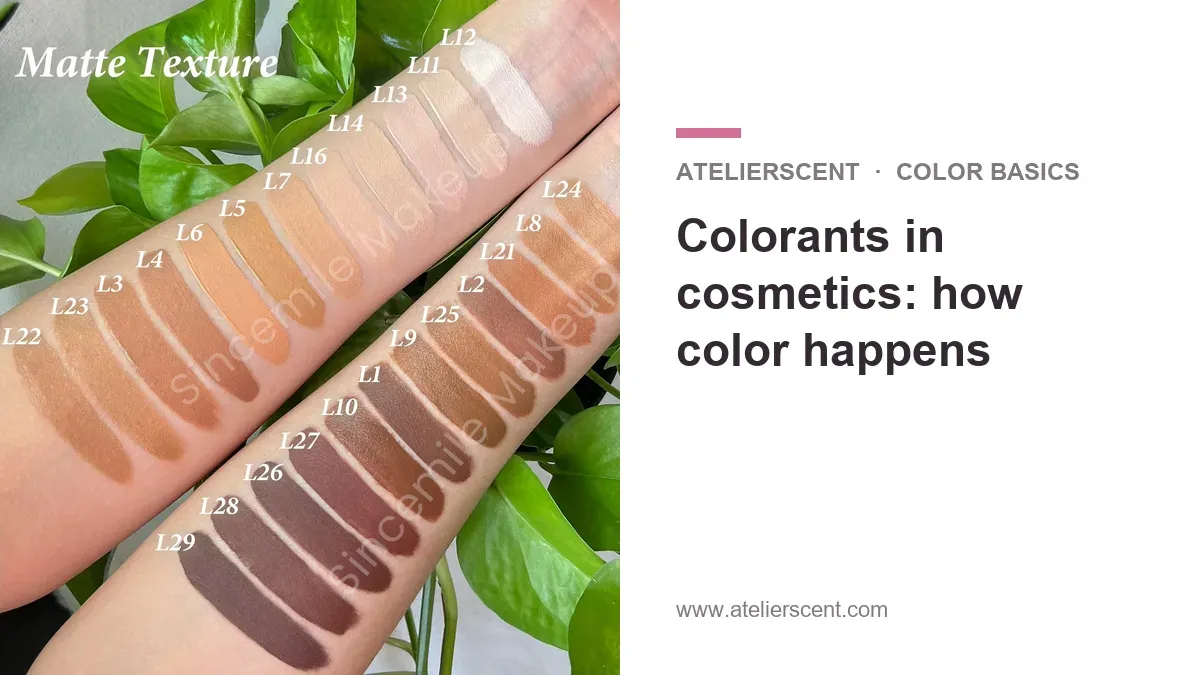
Every shade in your range — a red lipstick, a rose-toned blush, a matte eyeshadow — starts with one ingredient decision: the colorant. Cosmetics get their color from three working families: pigments, lakes and dyes. They are dosed into the base at the factory in controlled proportions, and on the finished label they usually appear near the end of the ingredient list, declared as CI numbers. If you are building a makeup line, understanding that system helps you brief shades clearly and read a formula like a buyer, not a bystander.
Pigments, Lakes and Dyes: the Three Families
Pigments are insoluble color particles — iron oxides and titanium dioxide are the classic examples. They sit in the product instead of dissolving, which is why they deliver coverage you can see. Dyes are the opposite: they dissolve into a formula and can bring vivid color, but they can also migrate and stain. Lakes split the difference — a dye anchored onto a mineral carrier so the color stays where it is applied. That stability is why lakes are a mainstay in lipsticks and pressed powders.
CI Numbers: How Color Shows Up on the Label
Under INCI naming, colorants are usually declared as CI followed by a number — CI 77491 for black iron oxide, for example — or sometimes by name, depending on the market. Because colorants are used at low levels, they typically sit at the tail of the ingredient list; our earlier INCI guide explains why that tail still matters. One practical note for brand owners: colorant rules differ between markets, so a manufacturer that exports widely works from the allowed lists for each destination rather than assuming one global formula.
Color is the one part of a formula customers judge from across the room. Batch-to-batch shade consistency is not a detail — it is what your brand looks like.
Choosing Shades That Fit Your Market
Shade selection is a positioning decision, not an afterthought. The shades that work for one market can miss in another, so start from your customers rather than from a factory color chart. Brief with references — bestsellers you admire, mood images, target tones — and confirm the final direction on physical samples before mass production. A focused, well-chosen shade range almost always outsells a sprawling one, and it keeps your first order lean.
How a Manufacturing Partner Supports the Color Work
This is where OEM/ODM support earns its keep. At Atelierscent, the makeup range covers foundation, eyeshadow, lipstick and lip gloss, developed with factory support to your positioning. Your logo and packaging design are handled in-house and free of charge, production runs under strict ISO 22716 and GMP standards, and low MOQ means you can test a shade range without betting your budget on it — then expand the winners on reorder.
Bring Us Your Shade Ideas
Collect the shades you want your brand to own and send them to Diana Dong, Sales Director, at Diana@vipetsy.com. You will get a quote built around your range — from design to shipment, one stop.