Oct 29, 2026Beauty Manufacturing Guides
One Hero Product: Anchoring a Skincare Line on Face Masks
The strongest skincare lines grow from one hero product done properly. Here is why face masks make a good anchor — and how to build a range around it.
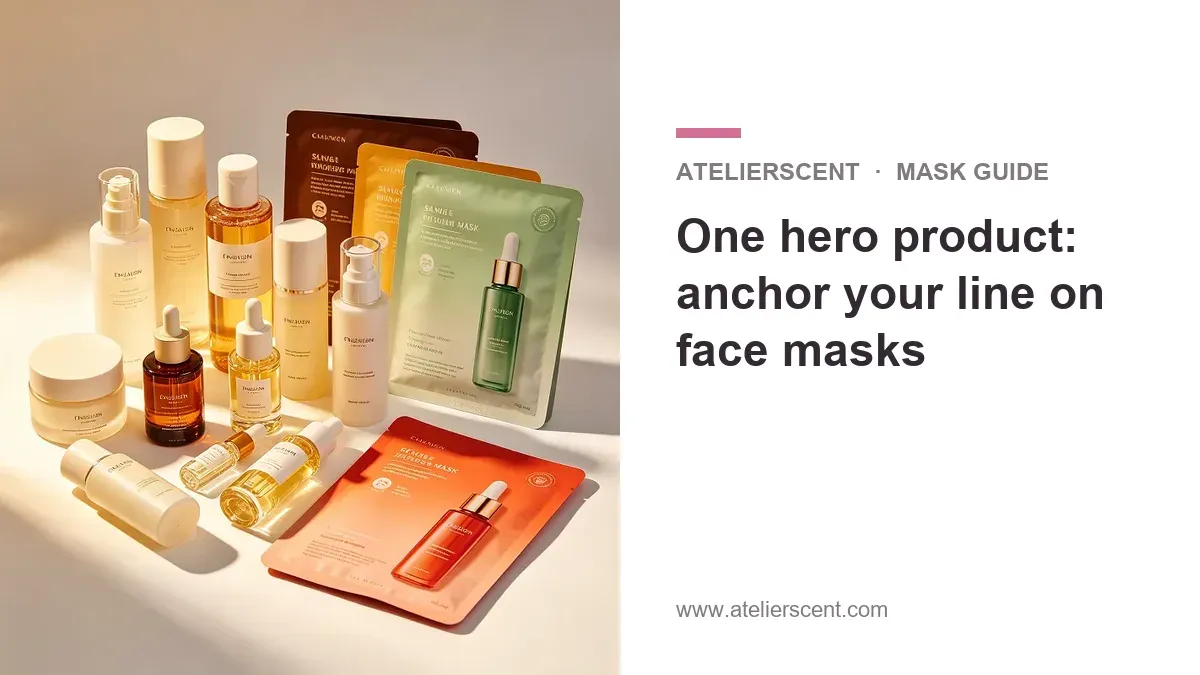
Almost every skincare brand you admire started as one product done properly — not as a full range. The anchor product carries the brand's promise, concentrates its budget, and gives customers a single reason to remember it. Everything launched afterwards is judged against that anchor. We have written about launching with a single product and about keeping a range tight; this article is about a specific, practical version of that idea: why face masks make a strong anchor, and how to build a line around one.
What an Anchor Actually Does
An anchor is not simply your best seller — it is the product your brand is allowed to be known for. It answers the one-sentence question every customer eventually asks: "what are they good at?" An anchor simplifies your own decisions too. Packaging style, tone of voice, which extension to launch next — an anchor turns those from open-ended debates into checks: does it serve the product we are known for?
Why Face Masks Anchor Well
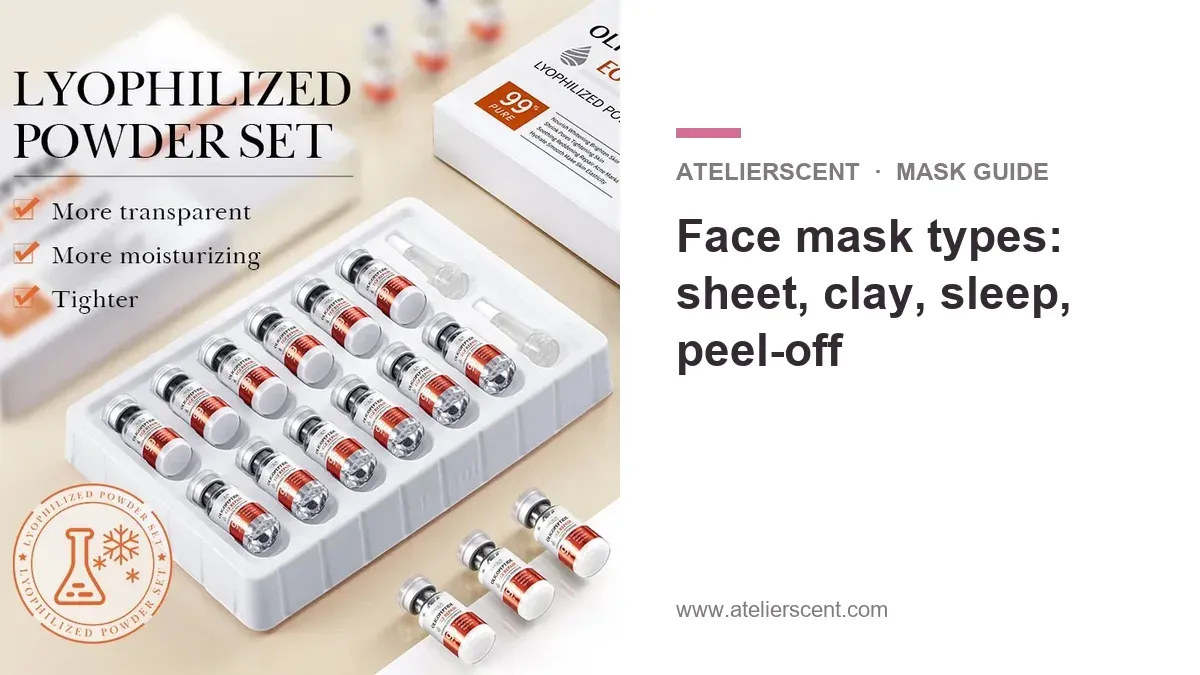
Masks have several qualities that suit the role. They are occasion products — a sheet mask session is a ritual, not a chore — which makes them giftable and photogenic in a way most skincare is not. They are low-commitment for a first-time buyer: one mask costs less and promises less than a cream, so trying your brand is an easy yes. And as our mask types guide showed, "mask" is a family — sheet, clay, sleep, peel-off — so an anchor chosen here has somewhere to grow without leaving its category.
A hero product is not your best seller. It is the product your brand is allowed to be known for.
Build Around the Anchor, Not on Top of It
Extensions earn their place by serving the same customer and the same moment the anchor serves. If your anchor is a sheet mask, the natural neighbors are the products that complete its ritual — a cleanser that prepares the skin, a cream that seals the session — not a second, unrelated hero competing for attention. That is the difference between a range that feels designed and a shelf that feels stocked.
Prove It, Then Extend
Low MOQ manufacturing is what makes the anchor strategy affordable: the first order tests one product properly instead of spreading a budget across five. Then the evidence decides the pace. If the mask reorders, the next product extends the moment it owns; if it does not, you have learned cheaply and your budget is intact. At Atelierscent, private label runs with low MOQ across the range, with logo and packaging design handled in-house for free and production under strict ISO 22716 and GMP standards — so the anchor and everything that grows around it stays visually and qualitatively one brand.
Pick Your Anchor
Tell Diana Dong, Sales Director, at Diana@vipetsy.com which product your brand should be known for, and get a quote built around that anchor — not around a shelf of maybes.