Oct 25, 2026Beauty Manufacturing Guides
Serving Sensitive Skin: A Market Worth Understanding
Sensitive-skin customers read labels harder, buy more carefully — and stay loyal when a product earns it. Here is what the segment means for your line planning and your claims.
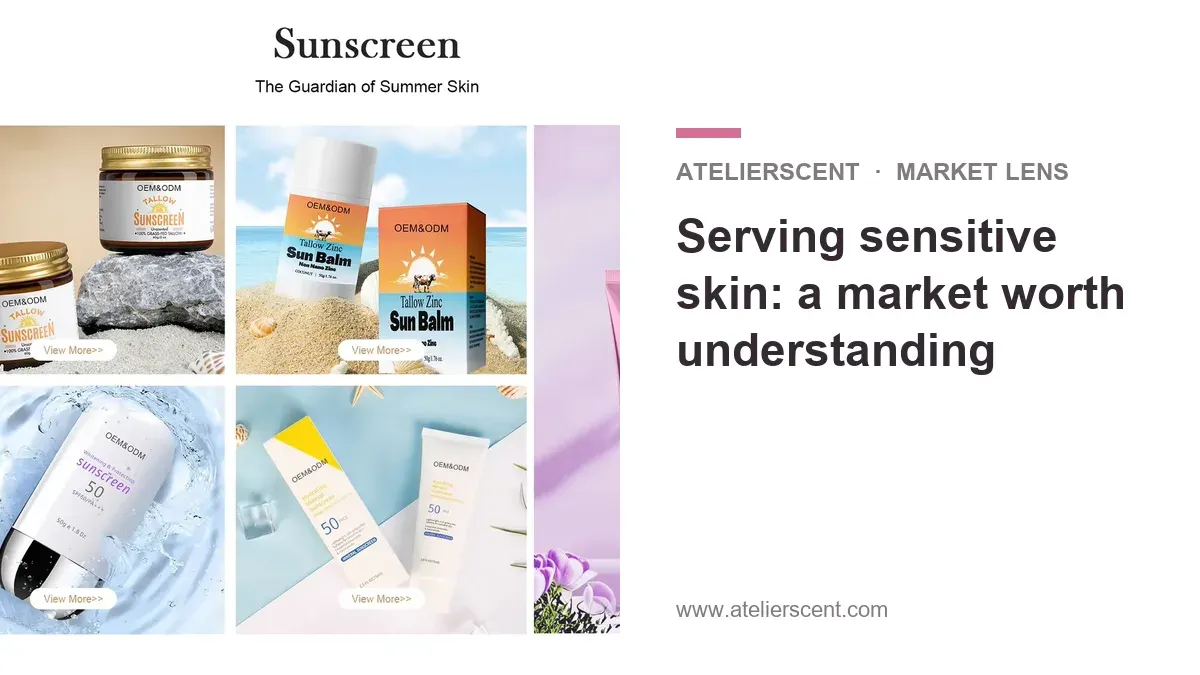
Ask around and you will keep hearing the same phrase: "my skin is too sensitive for that." A large share of beauty customers describe their skin this way, and they behave differently from the average shopper: they read ingredient lists before price tags, they research before they buy, and they remember products that treated them badly. For a brand planning a private label line, sensitive skin is less a separate category than a lens — it changes how you choose products, how you phrase claims, and how much documentation you need behind every promise. Treat it as a market worth understanding, whatever you decide to launch.
Why These Customers Behave Differently
Sensitive-skin buyers research first and purchase second. They are the audience most likely to actually read the INCI list you print — our earlier guide to ingredient lists is, not coincidentally, most useful to exactly this group. They lean on reviews and word of mouth, because personal recommendations feel safer than advertising. And their loyalty runs deep in one direction only: a product that does not cause irritation earns repeat purchases and referrals; a product that causes one bad reaction usually loses that customer for good.
What "Sensitive-Friendly" Really Requires
Serving this segment is mostly about discipline. Formulas tend to work with fewer, well-chosen ingredients rather than long dramatic lists. Fragrance and aggressive actives need a clear rationale, not a habit. And claims need care: phrases like "hypoallergenic" or "dermatologist tested" carry weight with these customers precisely because they have learned to be skeptical — which also means regulators and platforms watch them closely. The practical rule for a brand owner: never put a claim on the box that you cannot back with documentation from your supply chain.
For sensitive skin, the claim you can back is worth more than the claim that sounds best.
What to Ask a Manufacturing Partner
If your positioning leans toward this market, put direct questions to prospective partners: What experience do your formulations have with gentle, minimal-ingredient products? What documentation can you provide for the claims I want to make? How would a formula be adjusted if my market feedback demands it? Which claims would you refuse to print, and why? A partner who answers specifically — including with the occasional honest "no, we would not support that claim" — is showing you exactly the discipline this segment rewards.
Start the Conversation
Bring your positioning and your questions to Diana Dong, Sales Director, at Diana@vipetsy.com. You will get a straight answer about what can be supported for your line, what cannot, and a quote built around what you actually want to launch.