Oct 25, 2026Beauty Manufacturing Guides
Skincare Minimalism: What Simplified Routines Mean for Brands
More customers are trading ten-step routines for a few products that each do one clear job. Here is what that shift means for how you plan — and explain — your line.
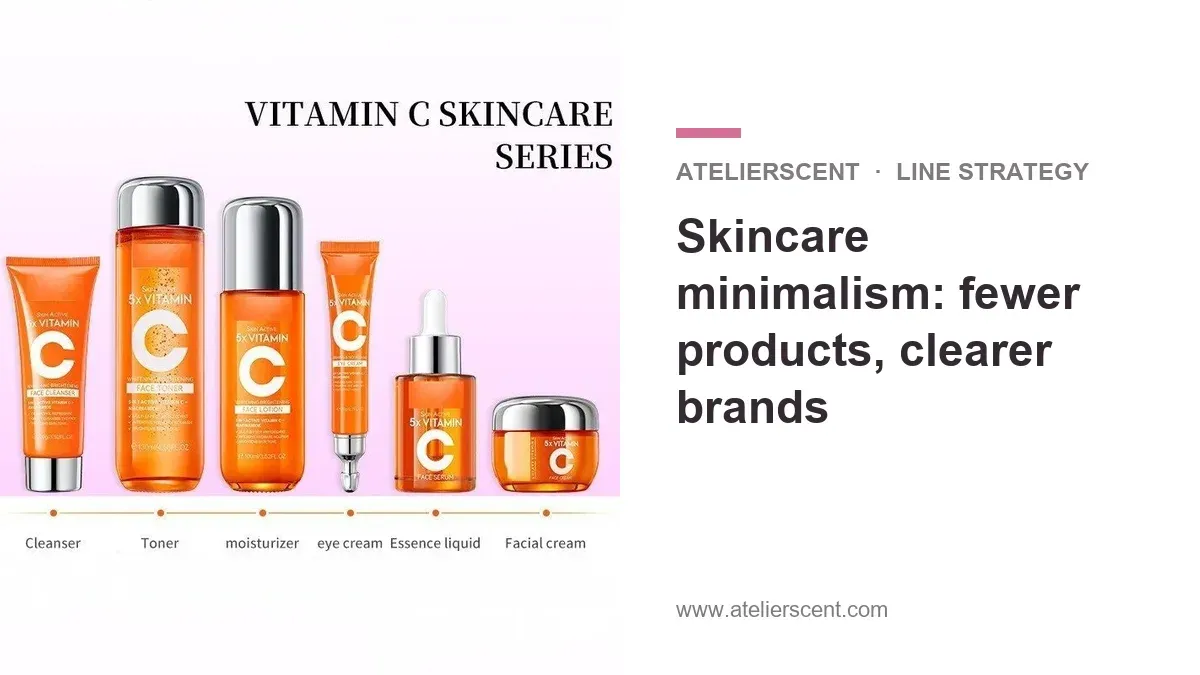
Skincare minimalism is the move away from long, ten-step routines toward a short shelf of products that each do one clear job: a cleanser, a moisturizer, a targeted treatment, a sunscreen. You do not need a market report to see it — you can hear it in how customers talk: fewer products, less redundancy, more scrutiny of what each item actually does. For a private label brand, that shift matters less as a trend to chase and more as a planning discipline: it rewards ranges that are tight, explainable and honest about what each product is for.
What Minimalist Routines Look Like
A minimalist routine is built around jobs, not steps: something that cleans, something that moisturizes, something that treats a specific concern, and sun protection where relevant. Customers assembling routines this way consolidate aggressively — a product without a distinct job is the first to get cut. That is why single-purpose clarity has become a selling point in itself: the question a minimalist shopper asks is not "what else could this do?" but "what does this replace?"
What It Means for Line Planning
For your range, minimalism argues for the same advice we gave when discussing a tight first skincare range: anchor the line on products that carry clear jobs — a cleanser, a cream, a sunscreen — and make each one defensible on its own before adding anything. Extensions should have a reason to exist that customers can state in one sentence. A focused range also concentrates your budget: fewer SKUs, deeper stock of the winners, and reorders that are easy to forecast.
When customers buy fewer products, each product has to justify its place on the shelf. That is not a trend problem — it is a positioning discipline.
How It Changes the Way You Explain Products
Minimalist shoppers scrutinize more, not less: buying fewer things, they read each one harder. That raises the bar for ingredient transparency and clear communication — our guides to reading an INCI list and to the sensitive-skin customer are useful precisely because this shopper checks both. Practically, it means your product pages should say what the product does, what it pairs with or replaces, and what is in it — in plain sentences, before any marketing language.
What to Ask Your Manufacturing Partner
If you want a minimalist-leaning line, put the planning questions to your partner directly: which formats anchor the category you are entering, how a tight range scales on reorder, and what the MOQ per SKU looks like so focus does not come at a painful premium. At Atelierscent, the skincare range covers face masks, face creams, soap, facial cleansers and sunscreens — private label with low MOQ, free logo and packaging design, manufactured under strict ISO 22716 and GMP standards, so a short list of products is a workable first order.
Bring Us Your Short List
Send the products you want your brand to stand on — even if it is only three — to Diana Dong, Sales Director, at Diana@vipetsy.com, and get a quote built around a range designed to stay focused.