Beauty Manufacturing Guides
Entry, Hero, Profit: How a Makeup Line Merchandises Itself
A makeup line is not a flat shelf of equals. Here is the three-layer way to think about yours — entry, hero and profit products — and what each layer is for.
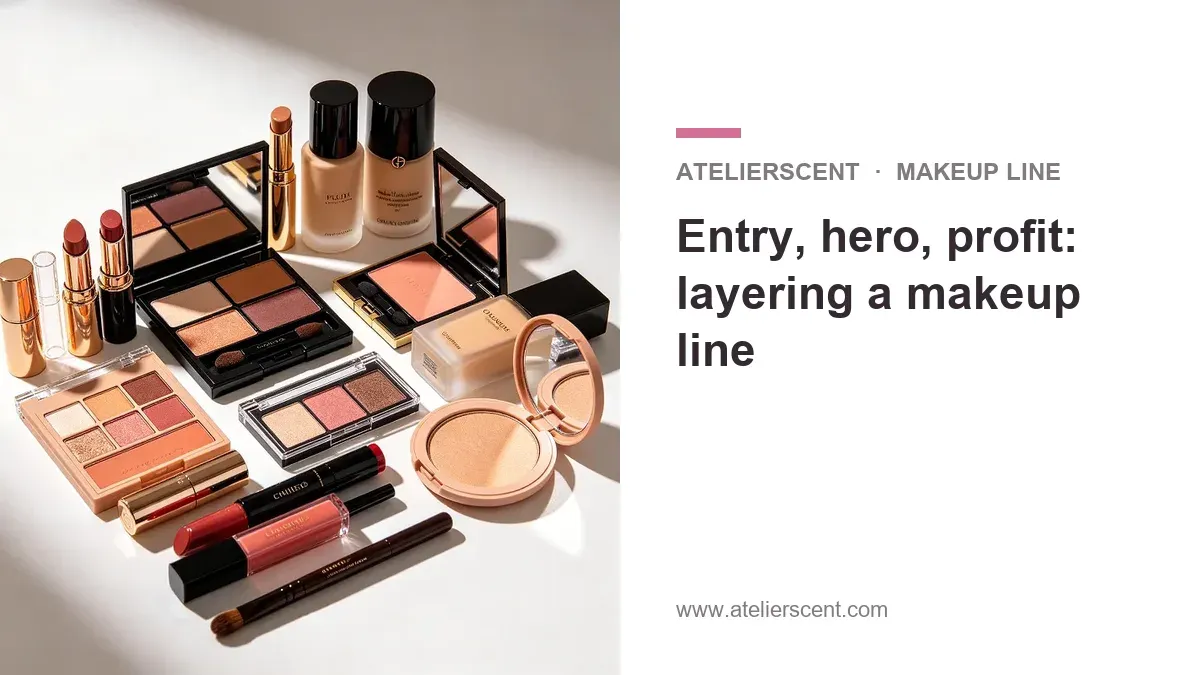
Look at a successful makeup line and you will see a flat shelf of products. Look again, commercially, and you will see layers. Some products exist to bring people in; one or two exist to define the brand; others exist to carry the economics. Merchandising is the discipline of knowing which layer each product belongs to — because the layer decides how you price it, when you promote it, and what you launch next. Here is the three-layer model, and how to map your line onto it.
Entry Products: The Wide Door
Entry products are the cheapest way to say yes to your brand: a gloss, a mini, a single eyeshadow — easy to explain, low commitment, priced to remove hesitation. Their job is not margin; their job is first purchase. The one rule an entry product must never break is quality: a cheap-feeling door poisons the ladder, because the entry product is the only evidence a new customer has. Small, yes — but made to the same standard as everything else you sell.
Hero Products: The Brand's Face
The hero is the product your brand is known for — the anchor idea we keep returning to. It gets the most design attention, the most content, and the most protection: heroes are the last products you discount and the first ones you keep consistent, because customers build habits on them and habits resent change. When someone says your brand's name, the product that comes to mind next is your hero. If nothing comes to mind, you do not have a hero yet — and that is the launch to plan next.
Profit Products: The Economics Layer
Profit products are where the order value lives: sets, kits, multi-piece bundles — the complete-look boxes we described for gifting. They sell in ones and twos rather than in volume, but each sale carries several products at once, which is what makes the line's economics work. This is also the layer where innovation tends to live, because a new format or a new pairing is easiest to sell as part of an experience rather than alone on a shelf.
A line is layered even when the shelf is flat. Entry opens the door, hero is the reason to stay, profit is what makes it a business.
The Layers Work Together
The model earns its keep in the connections. Entry feeds hero: the gloss buyer graduates to the hero product she keeps hearing about. Hero justifies profit: the complete-look set is attractive because the hero inside it is trusted. And the layers discipline discounting: markdown the entry to clear a season, protect the hero, and let sets carry value messaging instead of price cuts. On a product page, the merchandising is visible in the arrangement — the entry sits beside the hero it leads to, and the set completes what both start.
Map Your Line
Sort your products into the three layers honestly, and the next launch usually names itself: a missing door, an undefined hero, or a thin profit layer. With low MOQ private label manufacturing and packaging design handled in-house for free, filling any of those gaps stays affordable — and under one brand identity, no matter how many layers it eventually has.
Tell Diana Dong, Sales Director, at Diana@vipetsy.com which layer your line is missing, and get a quote for the product that fills it.