Beauty Manufacturing Guides
Launching Your Makeup Line: The Method, Step by Step
Everything this series has covered, in launch order: a step-by-step path for a private label makeup line — each step ending in one decision you can make this week.
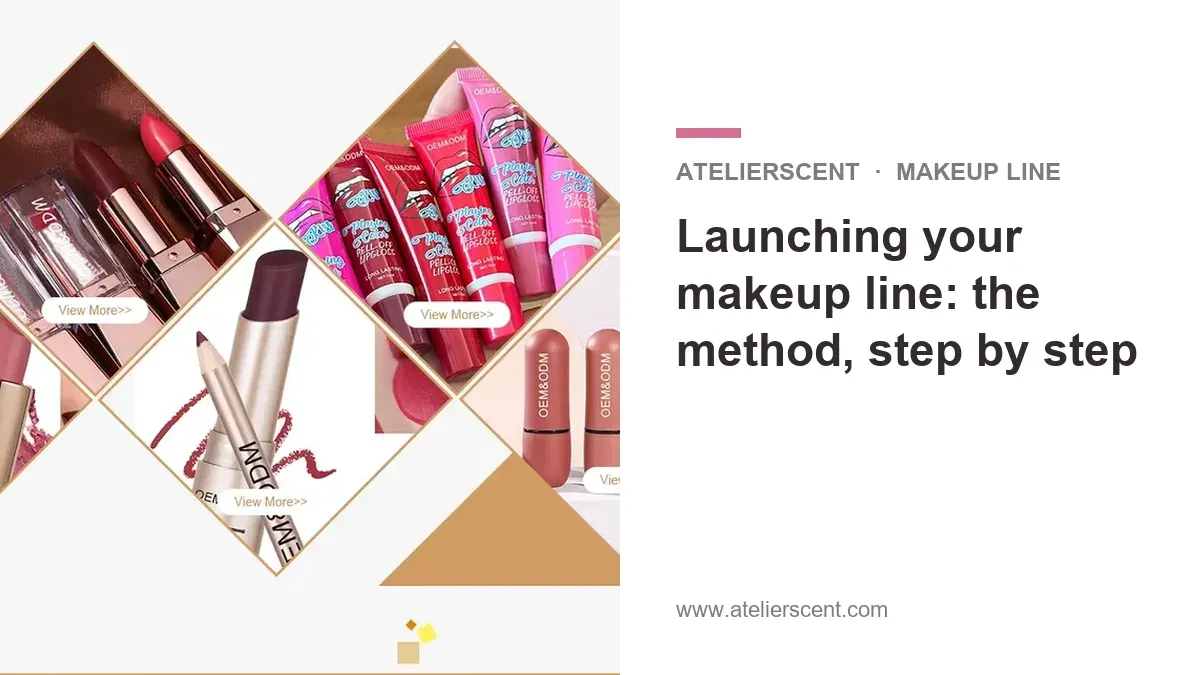
Over this series we have covered the pieces of a makeup launch one at a time: why base should come first, how to choose lip and eye formats, where shade ranges start and when they grow, what a box can honestly claim, how gift sets are built, and how entry, hero and profit products layer together. This article puts the pieces in launch order — a method you can actually walk, where each step ends in one decision small enough to make this week.
Step 1: Position the Line
Every later step reads differently depending on who the line is for — so start there and write it down: the customer, the market, the one sentence that says what your brand is about. Positioning decides formats before you see a single product chart, and it decides which shade ranges come first. One decision: name your customer and your market in a single sentence.
Step 2: Map the Layers — Entry, Hero, Profit
Next, sort the line into its commercial layers. Which product is the wide door? Which one do you intend to be known for? Where will the order value come from? You do not need all three layers at launch, but you need to know which one each product serves — and you need a deliberate hero, because that is the product every future launch will extend. One decision: name the hero, even if it is the only product in the first order.
Step 3: Choose Formats, Not Just Products
Lipstick, gloss or tint; palette, singles or liquid — formats are buyer decisions disguised as product decisions, as our lip and eye format guides showed. Your positioning already narrowed this: a polished brand opens with lipstick, an easy-wear brand with gloss, a speed brand with a liquid. One decision: one format per hero, chosen for the customer's moment rather than the catalog's arrangement.
Step 4: Set Shades by Market, Expand by Evidence
Start the shade range at the breadth your market actually needs, built as a navigable ladder rather than a scattered chart — then let the four expansion signals (the ends selling first, the repeated request, mismatch feedback, a new market) tell you when to widen. One decision: the starting breadth, capped before you ask for quotes.
Step 5: Write Claims With Your Factory
Before any box goes to print, put the claim list in front of the people who made the formula and ask what they can support with documentation — the discipline behind honest wear numbers and modest promises. One decision: no claim on the box that no one can point to a source for.
Step 6: Design the Packaging as One Identity
Packaging is where clarity earns trust: the three-line test, the thumbnail test, the unboxing sequence. Because the design layer has to cover the whole line eventually, it is worth deciding the visual system now — and with in-house design support included free at Atelierscent, the artwork, claims and print reality get reviewed as one piece. One decision: the one brand element every future product will carry.
A launch is not a day. It is a sequence of decisions — and each step above contains one you can make this week.
Step 7: Launch Small, Plan the Reorder From Day One
The final step is the one that makes the method affordable: launch at low MOQ, watch what actually sells, and treat the first reorder as the line's real debut — sized by evidence, expanded in families, funded by the first order's success. One decision: the stock level that triggers your reorder conversation.
One Partner Keeps the Steps in Order
Every step above gets simpler when one team carries it: design, formulation, production under strict ISO 22716 and GMP standards, and shipment — one stop, with low MOQ at each layer. That has been the quiet theme of the whole series: fewer handoffs, fewer places to stall.
Walk the Steps With Us
Bring your positioning sentence to Diana Dong, Sales Director, at Diana@vipetsy.com. We will walk the seven steps with you — and return them as a quote.